
What Does Lymph Have to Do with Pain?


To answer this question, let's visit the Panama Canal. Ships can't simply sail from one end to the other. No, they must pass through a series of passageways and locks. If one of those locks stops working, traffic backs up. Movement slows, and everything behind it is affected.
Lymph functions similarly to the Panama Canal. When the flow slows or becomes congested, tissues may not exchange nutrients as efficiently and can have a harder time clearing excess fluid and cellular waste. This results in swelling, which can increase pressure within the tissues, sometimes stimulating nociceptors (pain receptors) and sensory receptors and nearby nerves that send signals to the brain.
Here's a fun fact: Pain isn't actually felt in the tissue. It's an experience created by the brain. Your brain is constantly gathering information from nerves

throughout your body, deciding what needs your attention, and determining how to respond. (I like to picture Homer Simpson sitting at the control panel, multitasking with all the incoming messages. When in doubt he'll slam that pain button.)
Gentle vibration can be so helpful for people. Vibration provides the nervous system with additional sensory input that interrupts the pain cycle. It temporarily reduces perceived pain by altering the information sent to the brain. Think of it as sending an email instead of snail mail. When the nervous system, used to snail mail (aka pain in this example), suddenly receives an email (aka vibration), it finds itself needing to adjust to new information to process. Homer is busy being distracted by emails to worry about the "snail mail" we call pain.
This is where blood flow becomes so important. Blood delivers oxygen and nutrients to your tissues, while the lymphatic system helps remove excess fluid and cellular waste. Together, they create an environment that supports healing and helps maintain healthy tissue.
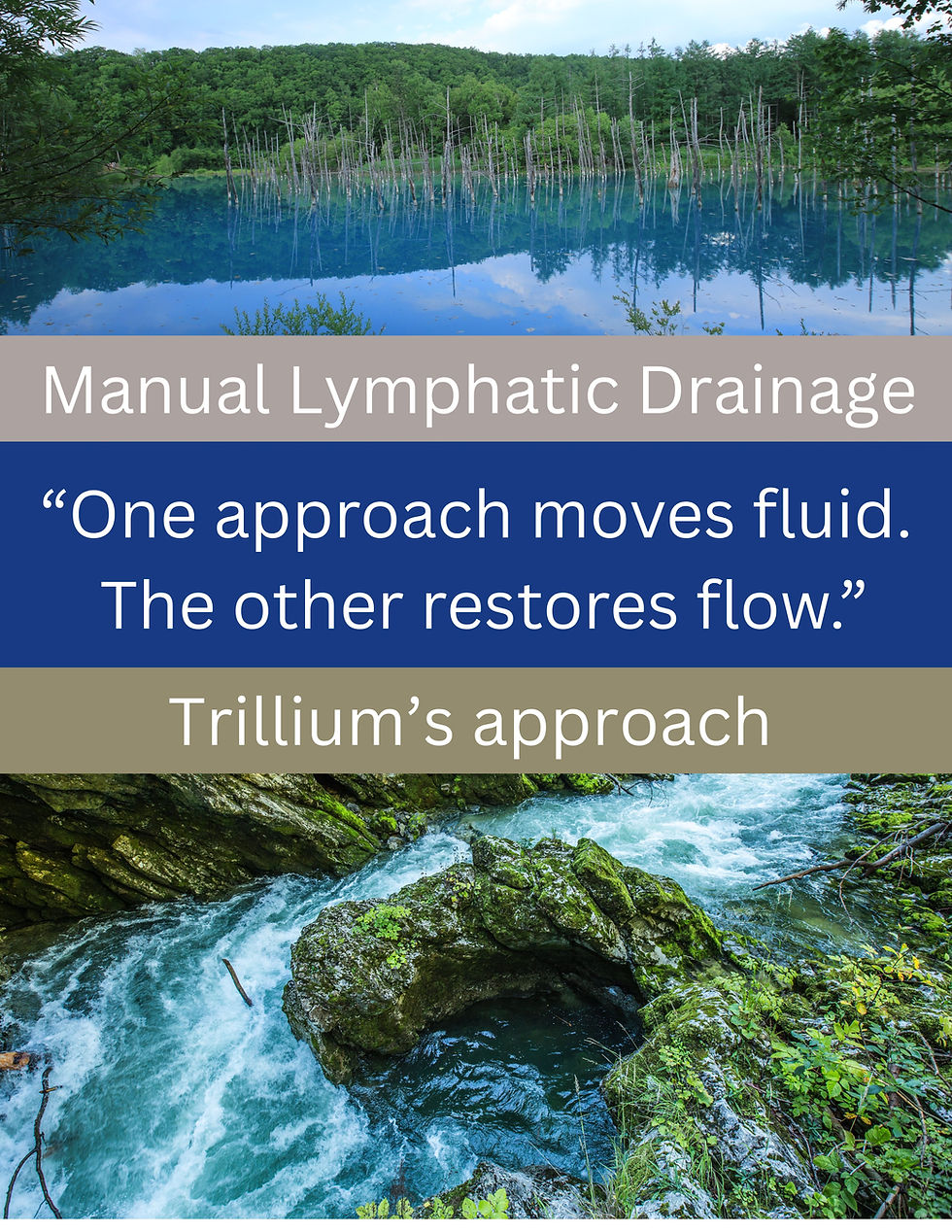
Back to Panama- When ships become stuck waiting in the Panama Canal, the water doesn't circulate as efficiently. Waste accumulates, and the environment changes. While the body is far more complex than a canal, the same principle of flow still applies. When lymphatic movement is restricted, fluid can become stagnant, inflammatory byproducts and cellular waste may not clear as efficiently, and tissues may become irritated or swollen. Where as healthy movement of blood in and out and lymph helps support the body's natural recovery processes.
In the end, pain is rarely the whole story. It's simply your body's way of asking for attention and not necessarily pointing to the root cause.
At Trillium Manual Therapies, we don't chase symptoms. We look at how the lymphatic system, nervous system, fascia, circulation, and movement work together because, as Dr. Perry says, "Nothing in the body gets injured alone, and nothing heals alone."
When we improve flow, reduce congestion, and help calm the nervous system, we're creating an environment where your body can do what it was designed to do: heal.

Comments